About This Course
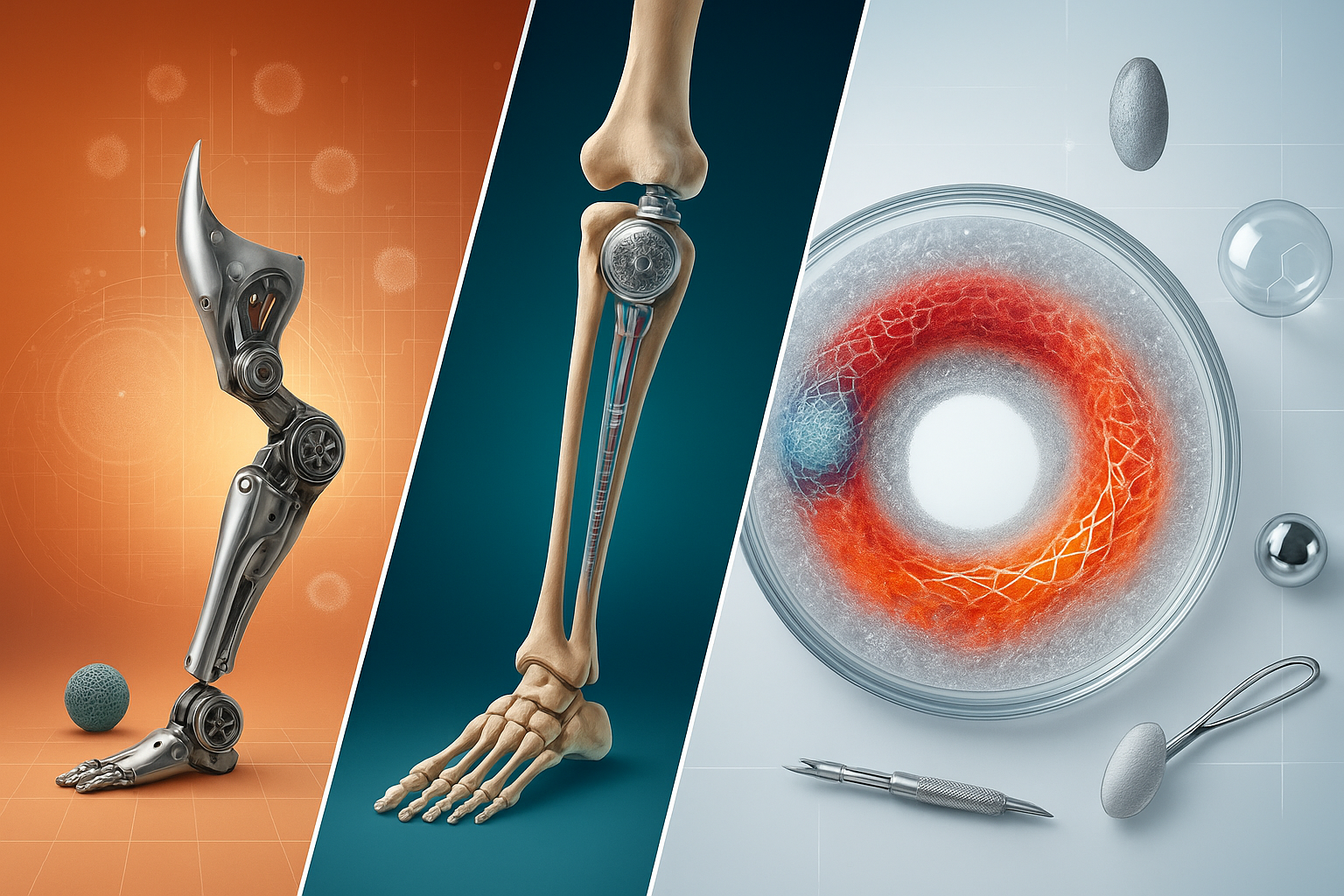
The course Implants and Prosthetics Engineering provides an in-depth understanding of modern implantable and assistive technologies designed to restore sensory, motor, and functional capabilities in individuals with disabilities. The first part of the course introduces students to state-of-the-art implantable neural prosthetic systems, with a special focus on visual and auditory prostheses. Students explore the engineering principles behind microelectronic visual implants, including epiretinal, subretinal, and extraocular retinal devices, as well as optic nerve and cortical visual stimulation approaches. The course also covers microelectrode array technologies, neural stimulation strategies, and DSP-based image processing systems that enable artificial vision.
The second component of the course focuses on modern cochlear implants and deep-brain–based auditory prostheses. Learners gain a comprehensive understanding of the system architecture, RF communication link, electrode design, safety considerations, and stimulation paradigms involved in restoring hearing in patients with sensorineural deficits.
The next segment of the course transitions to myoelectric control systems for upper limb prosthetics. Students examine the physiology of muscle activation, motor unit behavior, EMG signal generation, acquisition, processing, and interpretation. These principles are then applied to the control of terminal devices and electronic components in powered prosthetic arms.
The final modules deal with upper limb prosthesis design and the engineering of smart mechatronic hands. Emphasis is placed on pre-prosthetic assessment, component selection, control interfaces, actuation mechanisms, sensor integration, artificial prehension, and emerging brain–machine interface technologies for prosthetic control.
Overall, this course equips students with the analytical and technical skills required to understand, evaluate, and engineer advanced implantable and prosthetic systems, blending biomedical science with electronic system design, signal processing, and intelligent mechatronic control.
Course Staff
Ms. Soni Monica
Soni Monica received her B.Tech. degree in Electronics and Communication from Toc H Institute of Science and Technology (Cochin University) in 2011and M.Tech degree in Wireless Technology from Toc H Institute of Science and Technology in 2013. Joined Rajagiri School of Engineering and Technology as Assistant Professor on contract in July 2024.
Ms. Anila Kuriakose
Anila Kuriakose holds a B.Tech in Electronics and Communication Engineering from Rajagiri School of Engineering and Technology, Kakkanad (affiliated to Mahatma Gandhi University), graduating in 2010 with an impressive GATE score of 507 (96.3 percentile). She completed her M.Tech in Electronics with a specialization in Digital Electronics from Cochin University of Science and Technology (CUSAT), Kalamassery, in 2012.
In the same year, she joined the Rajagiri School of Engineering and Technology as an Assistant Professor. She has been actively involved in teaching, academic mentoring, and research activities over the past several years. She is currently pursuing her Ph.D. in Radar Signal Processing at APJ Abdul Kalam Technological University (KTU), focusing on advanced processing techniques and applications in modern radar systems.